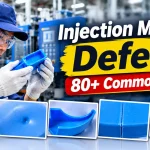
Working in Injection Molding? Learn 80+ Common Defect Types (NG) Found in Production
A practical guide for production operators, quality control inspectors, setters, technicians, and fresh graduates who want to understand product defects in the injection molding process.
Why Many New Operators Are Surprised When They First Start Working in Injection Molding
Many people assume that working in an injection molding department simply involves loading materials, pressing machine buttons, and waiting for finished products to come out. In reality, the process is far more complex.
In the plastic manufacturing industry, product quality is a top priority. A product that looks good at first glance does not necessarily meet quality control standards. Even a very minor defect can cause a product to be rejected by a customer.
That is why injection molding operators must understand the different types of NG (Not Good) defects that commonly occur during production.
This knowledge is essential because almost every company in the molding, automotive, electronics, packaging, household products, and medical product industries uses NG terminology as part of its daily operations.
The Reality of Working in Injection Molding
During job interviews for injection molding production operator positions, recruiters often ask whether applicants are familiar with plastic product defects or NG conditions.
The reason is simple. Operators who can identify defects quickly help companies reduce scrap, save materials, and maintain customer satisfaction.
Some automotive manufacturers even have very strict PPM (Parts Per Million) targets, meaning that even minor defects must not reach the customer.
The faster an operator can identify NG defects, the greater their opportunities to develop into a Team Leader, Quality Inspector, Setter, Technician, or Production Supervisor.
What Does NG Mean in Injection Molding?
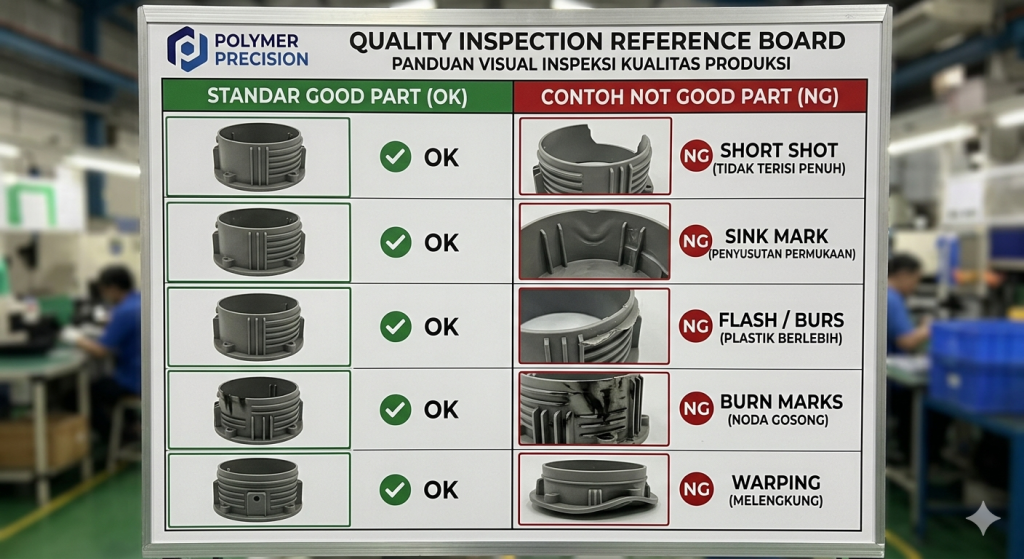
NG stands for Not Good. It refers to products that do not meet the quality standards established by the company or its customers.
NG defects can be caused by:
- Unstable machine parameters
- Material-related problems
- Mold damage
- Improper operator handling
- Incomplete cooling
- Material contamination
- Packing process issues
Common Types of NG Defects Found in Production
1. Material-Related Defects
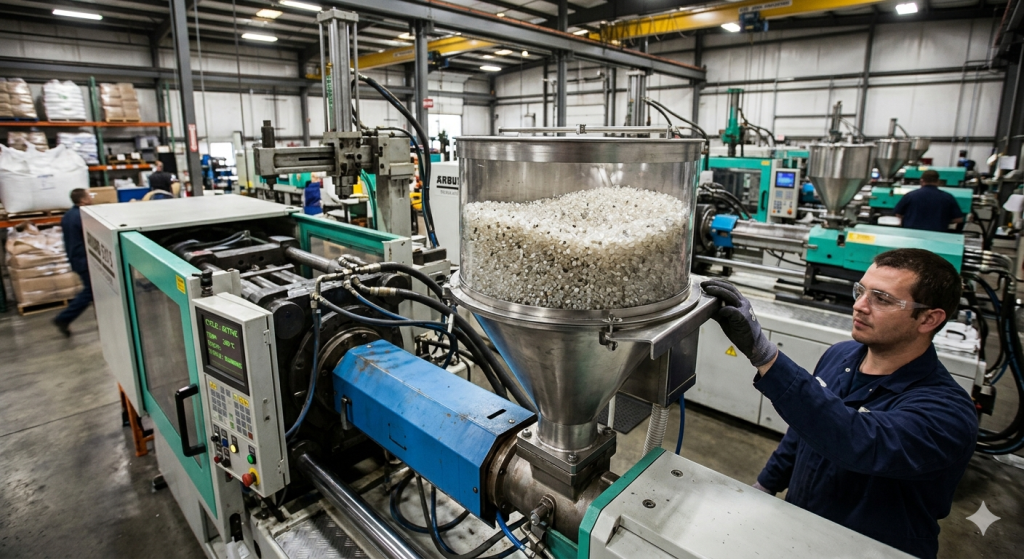
- Black Spot
- Burn Mark
- Contamination
- Material Mix
- Foreign Particle
- Yellowing
- Discoloration
- Silver Streak
- Splay Mark
- Moisture Mark
2. Incomplete Material Filling Defects
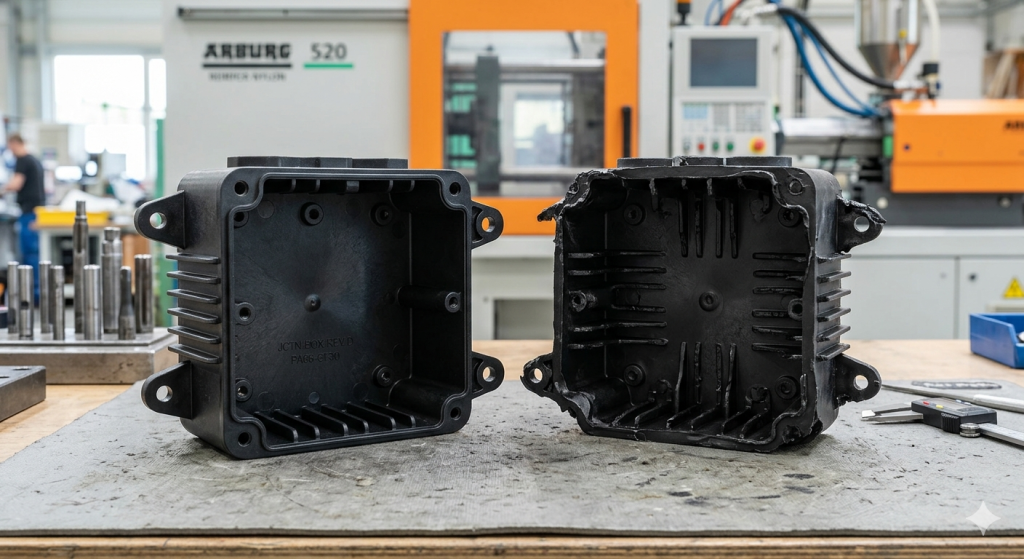
- Short Shot
- Under Fill
- Incomplete Fill
- Flow Hesitation
- Flow Line
- Jetting
- Cold Slug
- Cold Mark
3. Excessive Pressure-Related Defects
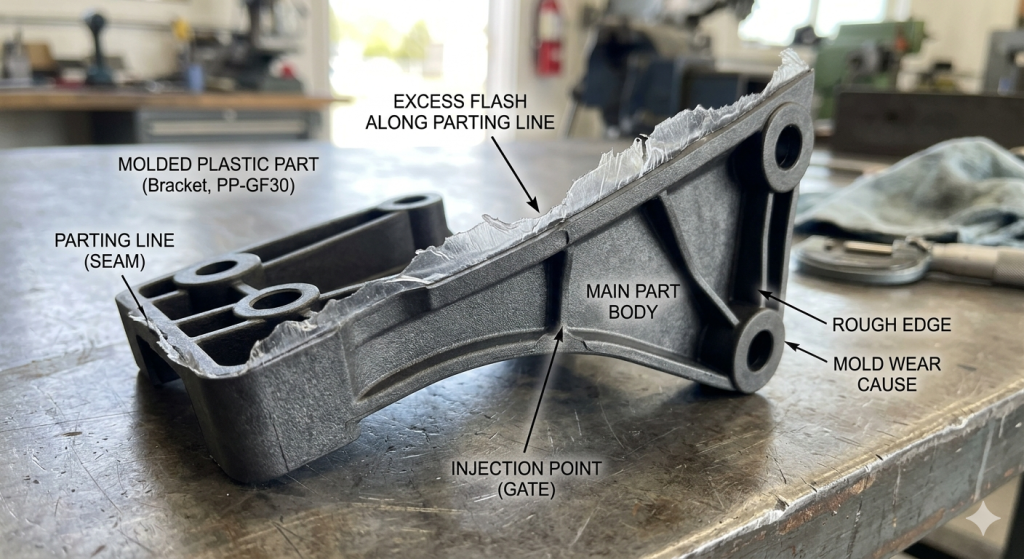
- Flash
- Burr
- Over Pack
- Over Flow
- Excess Resin
- Parting Flash
4. Cooling-Related Defects
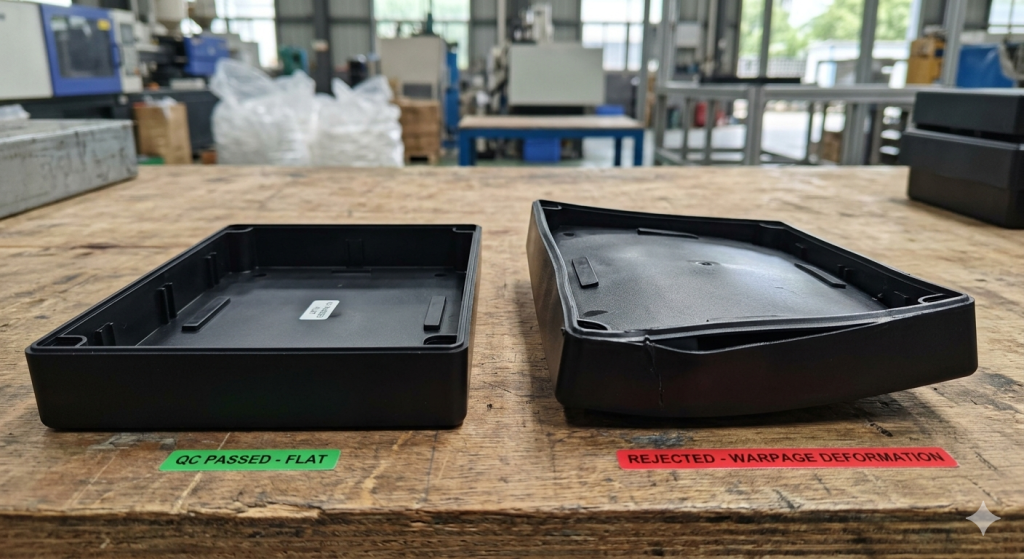
- Warpage
- Bending
- Twist
- Distortion
- Sink Mark
- Shrinkage
- Uneven Shrinkage
- Cooling Mark
5. Surface Defects
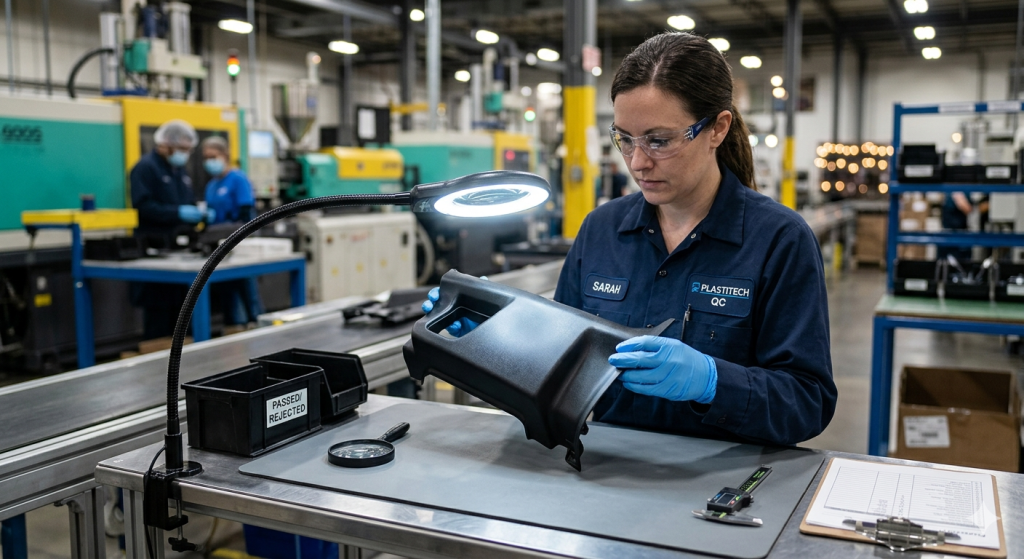
- Scratch
- Dent
- Crack
- Hair Line
- Pin Hole
- Bubble
- Blister
- Wrinkle
- Gloss Difference
- Surface Damage
6. Dimensional Defects
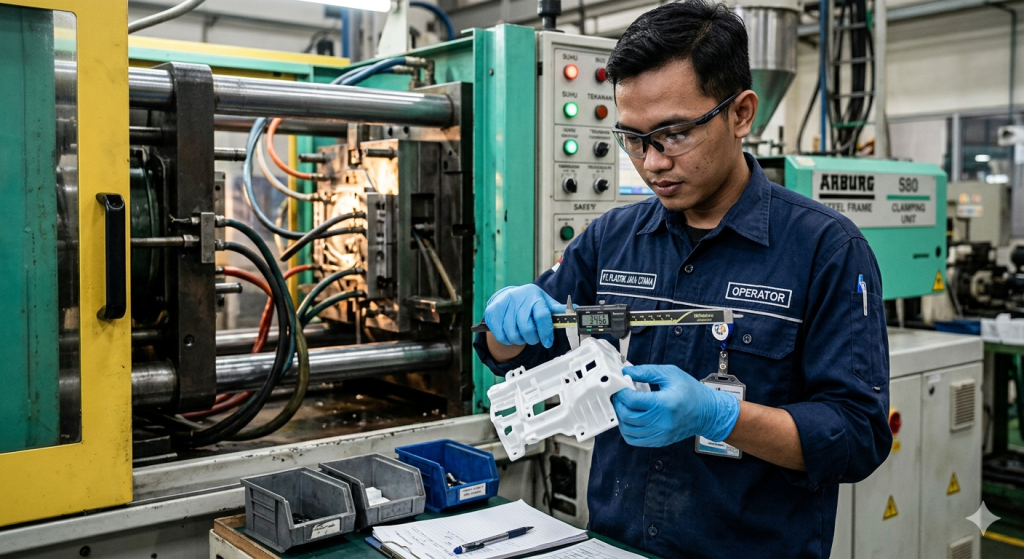
- Oversize
- Undersize
- Dimension Out
- Gap NG
- Height NG
- Thickness NG
- Length NG
- Width NG
7. Gate Area Defects
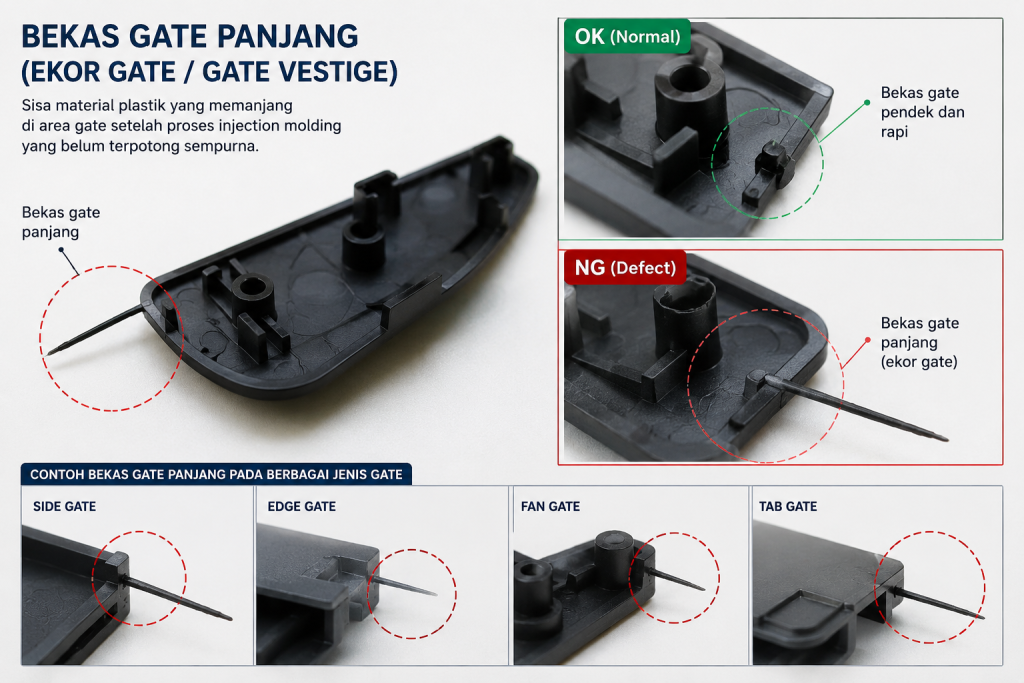
- Gate Long
- Gate White
- Gate Crack
- Gate Broken
- Gate Sharp
- Gate Dent
- Gate Stringing
- Gate Deform
8. Weld Line and Material Flow Defects
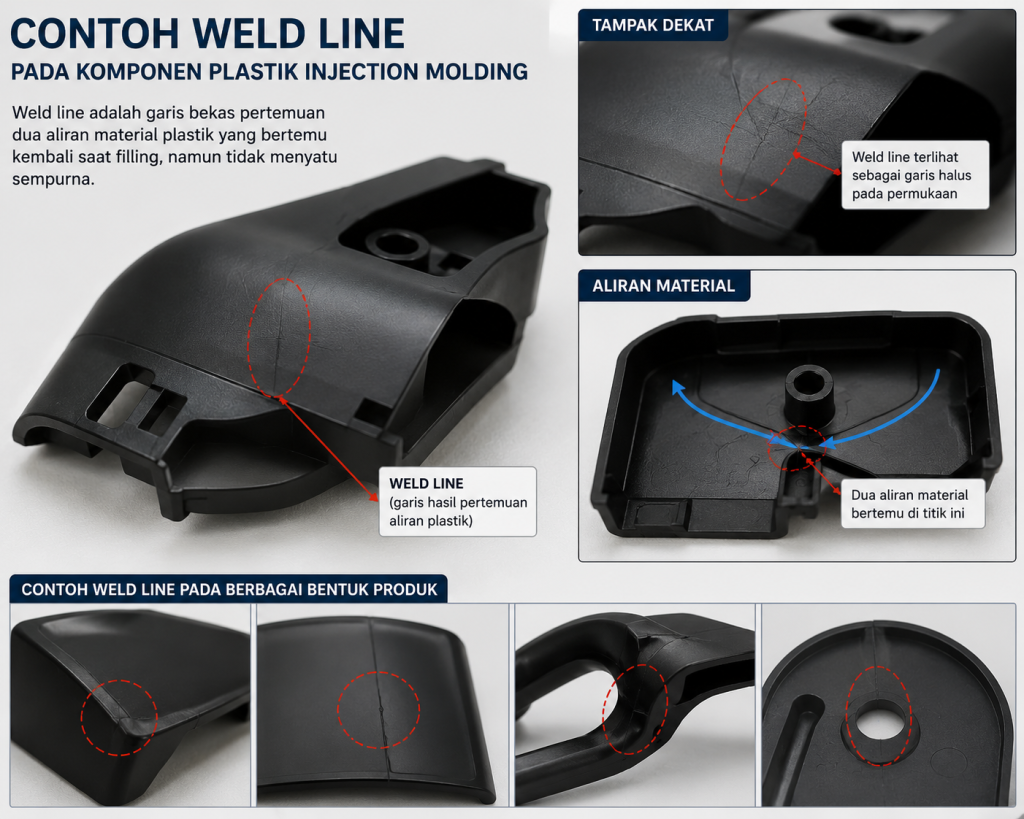
- Weld Line
- Weak Weld
- Flow Mark
- Resin Line
- Melt Line
- Knit Line
9. Mold Damage-Related Defects
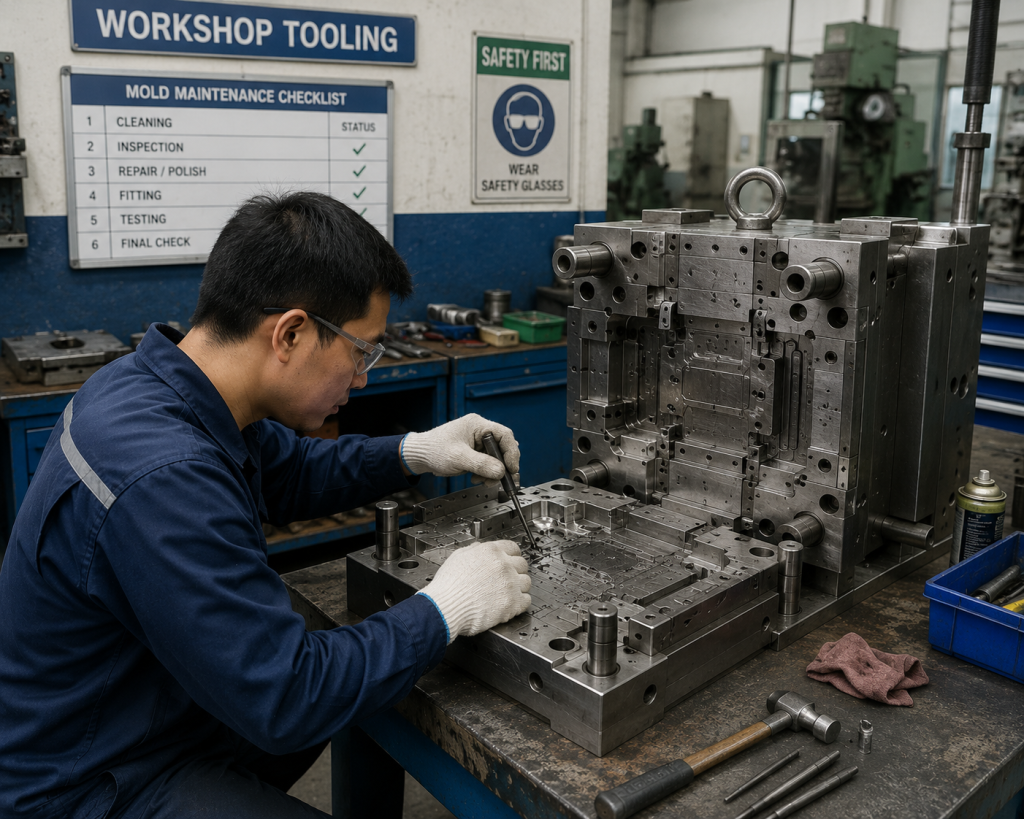
- Mold Damage
- Insert Damage
- Core Damage
- Cavity Damage
- Ejector Mark
- Ejector White
- Drag Mark
- Tooling Mark
10. Handling-Related Defects
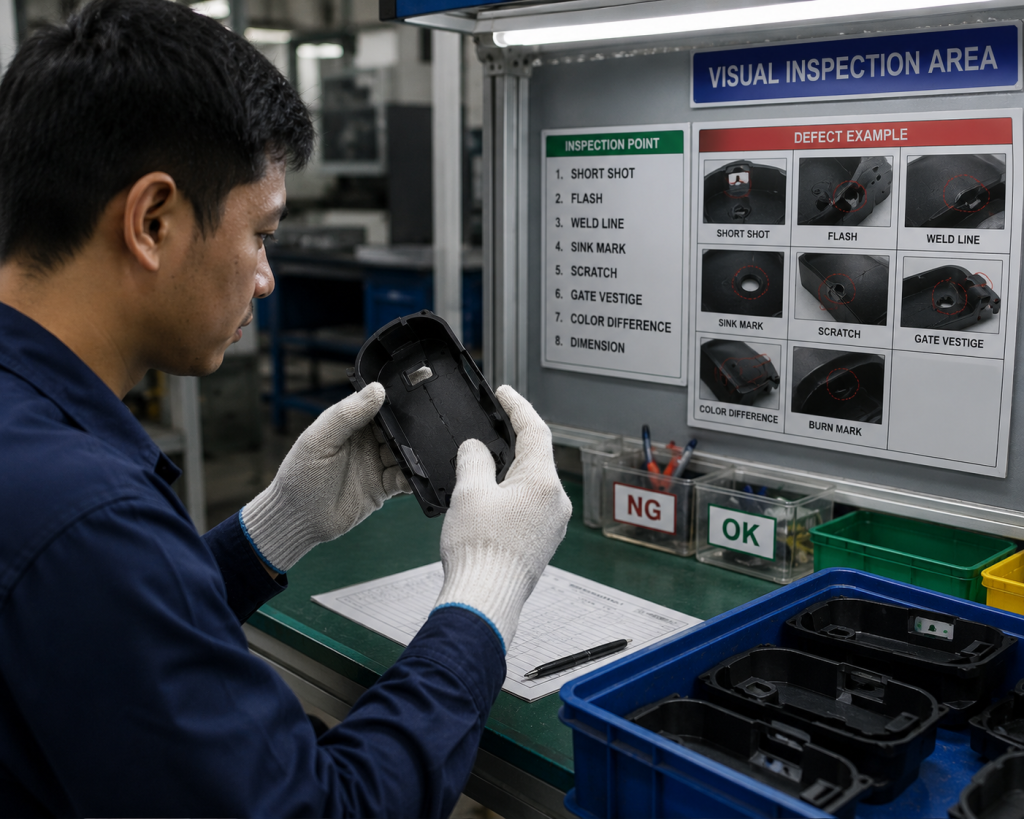
- Finger Mark
- Oil Stain
- Dirty Part
- Dust Mark
- Packing Damage
- Broken Part
- Missing Part
- Mix Product
11. Assembly and Functional Defects
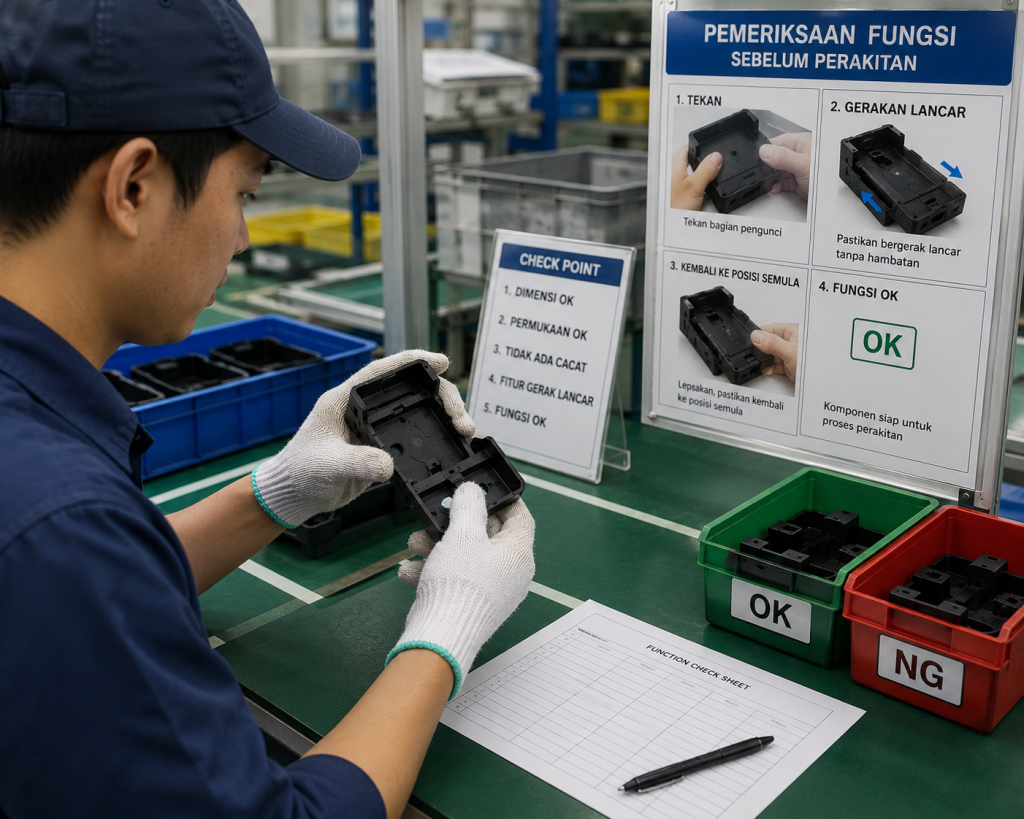
- Assembly NG
- Fit NG
- Loose Fit
- Tight Fit
- Clip Broken
- Hook Damage
- Functional NG
- Lock Failure
12. Other Common Defects
- Color Mismatch
- White Spot
- Black Dot
- Air Trap
- Vacuum Void
- Void
- Chipping
- Peeling
- Layer Separation
- Resin Leak
- Marking NG
- Printing NG
- Stamping NG
- Label NG
- Barcode NG
- Identification NG
When all the categories above are counted, the list contains more than 80 types of NG defects commonly encountered in modern injection molding production environments.
“In many injection molding companies, operators who are familiar with different types of NG defects are often trusted with important customer products sooner than operators who focus only on running the machine.”
Common Mistakes Made by New Operators
- Assuming that every product coming out of the machine automatically meets quality standards.
- Failing to compare products with the approved master sample.
- Not understanding the customer’s visual inspection standards.
- Ignoring minor defects.
- Failing to report recurring NG defects.
How to Learn NG Defects Faster
If you are new to injection molding, start by learning the most frequently encountered defects, such as Short Shot, Flash, Sink Mark, Weld Line, Gate Long, Scratch, Black Spot, and Warpage.
Ask your team leader or quality control inspector for permission to examine both OK samples and NG samples. This approach is much more effective than simply memorizing defect names from work documents.
The more real products you inspect, the faster you will develop the ability to recognize manufacturing defects.
Conclusion
Working in injection molding involves much more than operating production machines. One of the key skills that distinguishes an average operator from an operator with strong career potential is the ability to recognize different types of NG defects.
Understanding product defects prepares you to handle quality control inspections, customer audits, and potential career advancement opportunities in the future.
For fresh graduates and job seekers interested in entering the plastic manufacturing industry, understanding injection molding NG terminology is valuable preparation before starting work.
Key Takeaways
- NG refers to products that fail to meet established quality standards.
- Short Shot, Flash, Sink Mark, Gate Long, Scratch, and Weld Line are among the most common defects.
- Understanding NG defects can increase your professional value in the manufacturing industry.
- Learning from actual OK and NG samples is one of the most effective ways to understand product quality.